No products in the cart.: $0.00

Lemon Peel Extract
ORY® product lines:
☑ Skincare (furanocoumarin-free extract)
☑ Haircare
☑ Handmade Soap (peel powder/zest; classic)
☑ Cosmetics (limited: brightening, fragrance labeling) — full dual-use ingredient with photosensitivity caveats
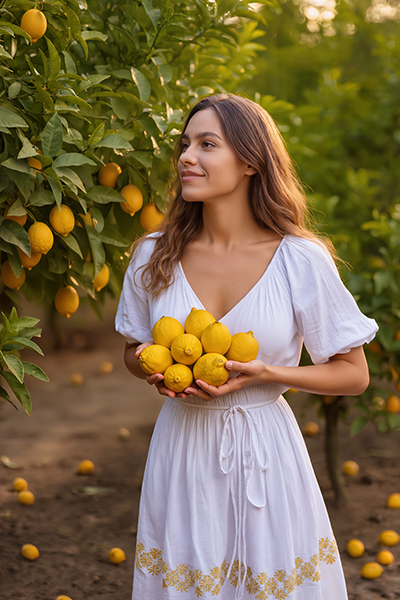
Lemon peel extract concentrates the flavonoids, phenolic acids, and vitamin C of Citrus limon zest without the harshness of raw lemon juice. Its key actives — hesperidin, eriocitrin, naringin, and limonene — are antioxidant, anti-inflammatory, and antimicrobial, and hesperidin in particular supports skin barrier function and reduces pigmentation in laboratory and animal studies [1, 3]. A combined citrus-and-rosemary extract protected human volunteers against UV-induced skin damage [2]. The essential caution is phototoxicity: cold-pressed lemon peel oil contains furanocoumarins (bergapten, oxypeucedanin) that cause severe sunburn-like reactions in sunlight [4]. ORY® therefore uses hydro-glycerin or furanocoumarin-free lemon peel extract in leave-on products and reserves peel powder and oil for rinse-off soap.
What is Lemon Peel Extract made of?
Lemon peel extract is prepared by water/glycerin or hydro-alcoholic extraction of dried zest (flavedo), or by drying the peel to a powder. Constituents [1]:
- Flavanones (hesperidin, eriocitrin, naringin): Antioxidant, anti-inflammatory, capillary-strengthening; hesperidin supports barrier and reduces melanin [3].
- Flavones (diosmin, apigenin) and polymethoxyflavones: Anti-inflammatory, anti-aging.
- Vitamin C and citric acid: Antioxidant and mild exfoliant.
- Limonene and citral (essential-oil fraction): Antimicrobial, aromatic; limonene oxidizes to a sensitizer.
- Furanocoumarins (bergapten, oxypeucedanin): Phototoxic; present in cold-pressed oil, largely absent from water/glycerin extracts and removed in FCF grades.
- Pectin and fiber (powder): Gentle exfoliant in soap.
What skin type is best suited for Lemon Peel Extract?
Lemon peel extract (furanocoumarin-free) suits oily, dull, and uneven skin best; sensitive and dry skin need care:
- Oily: Astringent, antimicrobial, purifying.
- Combination: Brightening toners and serums for uneven tone.
- Acne-prone: Antibacterial limonene and anti-inflammatory flavonoids; supports fading of marks.
- Normal: Antioxidant and radiance maintenance.
- Mature: Flavonoid antioxidants and UV-protective support [2]; hesperidin barrier benefits [3].
- Dry: Low levels in a hydrating base; avoid acidic formats.
- Sensitive: Use cautiously — citric acid and limonene can sting; patch test; never lemon juice or oil.
What hair type is best suited for Lemon Peel Extract?
Lemon peel clarifies oily scalps and adds shine to lighter hair:
- Oily scalp: Clarifying, degreasing rinses and shampoos.
- Dandruff-prone scalp: Antimicrobial and mild exfoliating support.
- Straight and wavy: Shine and clarifying rinses.
- Color-treated: Traditional brightening for blonde tones (mild; avoid sun exposure after lemon-oil products).
- Curly and coily: Occasional clarifying rinse; follow with conditioning.
- Dry or damaged, sensitive scalp, mature or thinning: Low level or avoid; can be drying.
What are the benefits of Lemon Peel Extract?
Lemon peel’s benefits are supported by phytochemical reviews and human/laboratory studies [1–4]:
- Antioxidant: Hesperidin, eriocitrin, and vitamin C scavenge free radicals [1].
- UV protection support: Citrus flavonoid extract (with rosemary) reduced UV damage in volunteers [2].
- Brightening: Hesperidin inhibits melanin production; vitamin C supports even tone [3].
- Barrier support: Hesperidin improved barrier function and hydration in animal studies [3].
- Antimicrobial: Limonene, citral, and flavonoids inhibit acne and scalp microbes.
- Anti-inflammatory: Flavanones reduce inflammatory mediators.
- Mild exfoliation: Citric acid and peel powder gently smooth.
- Clarifying and deodorizing: Fresh scent and degreasing action in soap and haircare.
Dual use across ORY® product lines
Lemon peel works across all four ORY® lines when the right form is chosen for each — extract for leave-ons, powder and zest for soap.
| ORY® line | Dual use? | How it is used | Typical level |
|---|---|---|---|
|
ORY® Skincare |
Yes |
Brightening toners, serums, masks, cleansers; furanocoumarin-free extract only; pair with SPF messaging. |
1–5% extract |
|
ORY® Haircare |
Yes |
Clarifying shampoos, scalp rinses, shine sprays (extract). |
1–3% extract |
|
ORY® Handmade Soap |
Yes |
Dried peel powder or zest for exfoliation and color; lemon peel oil for scent (rinse-off reduces phototoxic concern; keep ≤2% of oils). |
1–2 tsp powder per lb; 1–2% peel oil |
|
ORY® Cosmetics |
Limited |
Brightening primers and foundations (extract, low level); fragrance-allergen labeling for limonene/citral. |
0.5–2% extract |
Pros and cons of Lemon Peel Extract
Pros
Cons
- Antioxidant and brightening flavonoids: [1, 3].
- Human UV-protection data (with rosemary): [2].
- Antimicrobial and clarifying: Oily skin and scalp.
- Classic soap ingredient: Fresh scent, natural exfoliant.
- Affordable, upcycled: Peel is a juice-industry by-product.
- Phototoxicity of peel oil: Furanocoumarins cause burns in sun; leave-on products must use FCF-free extract [4].
- Irritation: Acidic and terpene-rich; can sting sensitive or dry skin.
- Fragrance allergens: Limonene and citral require labeling; oxidized limonene sensitizes.
- Customer misuse: Lemon-juice DIY skincare is harmful; ORY® should educate.
- Limited controlled skin trials: Most evidence is on isolated flavonoids.
What is the best application of Lemon Peel Extract?
Lemon peel extract is a brightening, clarifying supporting active:
- Brightening toner or serum: 2–5% FCF-free extract PM with niacinamide and licorice; SPF every morning.
- Purifying cleanser: Daily for oily skin.
- Clay mask: Weekly with peel powder and kaolin.
- Clarifying shampoo or rinse: Weekly for oily scalps.
- Shine spray: Low-level extract for lighter hair.
- Soap: Lemon-poppyseed or lemon-zest scrub bars.
- Cosmetics: Brightening primer (extract).
Peer-reviewed references
- Klimek-Szczykutowicz M, Szopa A, Ekiert H. Citrus limon (lemon) phenomenon—a review of the chemistry, pharmacological properties, applications in the modern pharmaceutical, food, and cosmetics industries, and biotechnological studies. Plants. 2020;9(1):119.
- Pérez-Sánchez A, Barrajón-Catalán E, Caturla N, et al. Protective effects of citrus and rosemary extracts on UV-induced damage in skin cell model and human volunteers. Journal of Photochemistry and Photobiology B: Biology. 2014;136:12–18.
- Man MQ, Yang B, Elias PM. Benefits of hesperidin for cutaneous functions. Evidence-Based Complementary and Alternative Medicine. 2019;2019:2676307.
- Naganuma M, Hirose S, Nakayama Y, Nakajima K, Someya T. A study of the phototoxicity of lemon oil. Archives of Dermatological Research. 1985;278(1):31–36.
Disclaimer:
The information on this page is provided by ORY International, LC for educational purposes only. It summarizes published research about lemon peel extract as an ingredient, including laboratory and animal studies and clinical studies of formulas that may differ from ORY® products. Results from these studies may not apply to every person or to ORY® products. This page is not medical advice and does not replace advice from a dermatologist, physician, or other qualified healthcare provider.
ORY® Skincare, Haircare, Handmade Soap, and Cosmetics products are cosmetics. They are not intended to diagnose, treat, cure, mitigate, or prevent any disease or condition, including hyperpigmentation disorders, acne, dandruff, infections, sun damage, or any other condition. References to FDA or Cosmetic Ingredient Review (CIR) findings describe the ingredient, not ORY® products, and do not mean FDA has reviewed or approved any ORY® product.
Results vary by skin and scalp type, formulation, and use. Lemon peel contains limonene and citral, which can cause allergic reactions, and cold-pressed lemon oil can cause burns or dark marks on skin exposed to sunlight. Any cosmetic can cause irritation, sometimes from other ingredients. Always patch test, follow label directions, and stop use if irritation occurs. If you are pregnant, nursing, have a medical condition, or are buying for a child, consult a healthcare provider before use.
ORY International, LC works to keep this page accurate and current but makes no warranty as to its completeness. To the fullest extent permitted by law, ORY International, LC is not liable for any loss or injury arising from reliance on this information or from use of any product contrary to its label directions. To report a reaction, contact us at [insert contact email / phone].